
Popular Equipment For Tree Removal Professionals
Discover essential tools favored by experts to handle tree removal tasks with precision and ease.
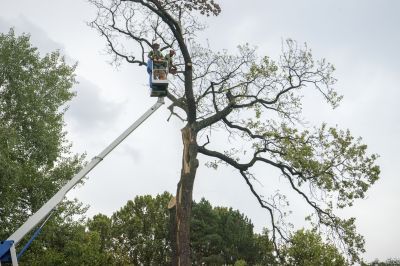 Tree removal is a task that often requires specialized equipment to ensure safety and efficiency. Whether managing overgrown branches, fallen trees, or hazardous limbs, having the right tools can make a significant difference. From manual hand tools to powered machinery, a variety of products are available to meet different needs and skill levels. Proper selection not only facilitates the removal process but also helps in maintaining safety standards during potentially dangerous operations.
Top Overall Option
Multi-Functional Tree Removal Tool Set
A versatile collection of manual and powered tools designed to handle various tree removal tasks. This set often includes pruning saws, loppers, a pole saw, and safety gear, making it suitable for both DIY enthusiasts and professionals seeking comprehensive equipment. Its adaptability and range of functions support safe and efficient tree management across different scenarios.
Types of Products For Tree Removals
Chainsaws
Powerful handheld tools for cutting through large branches and trunks, available in gas, electric, and battery-powered models.
Pole Saws
Extendable saws that allow reaching high branches without a ladder, ideal for pruning and small removals.
Pruning Saws
Manual saws designed for precise cuts on branches and smaller limbs.
Loppers
Long-handled cutting tools suitable for trimming thick branches at waist height.
Manual Hand Pruners
Compact tools for trimming smaller branches and detailed work.
Stump Grinders
Machines used to grind down remaining tree stumps after removal, facilitating land clearing.
Rope and Pulley Systems
Equipment to assist in controlled lowering of large branches or trees.
Safety Gear
Helmets, gloves, eye protection, and protective clothing to ensure safety during removal tasks.
Tree Climbing Gear
Harnesses, spikes, and ropes for professional tree climbers performing complex removals.
Felling Wedges
Tools used to guide the direction of falling trees and prevent splitting.
Chainsaw Accessories
Bars, chains, and oil for maintaining and enhancing chainsaw performance.
Tree Bracing and Support Systems
Supports to stabilize leaning or weak trees before removal.
Debris Bags and Chutes
Collect and direct cut branches and wood debris for easier cleanup.
Hydraulic Tree Removal Equipment
Heavy machinery like hydraulic cranes for large or hazardous tree removals.
Aerial Work Platforms
Elevating platforms to access high branches safely without climbing.
Popular Choices
Popular for their portability and ease of use, suitable for small to medium tasks.
Convenient for reaching high branches with minimal effort.
Favored for detailed trimming and small limb removal.
Preferred for their power and ability to handle larger trees efficiently.
Offer cordless convenience for pruning and small removals.
Popular for quick stump grinding after tree removal.
Used frequently for controlled lowering of large limbs.
Essential safety gear that is widely used by professionals and amateurs.
Common among professional arborists for high-risk removals.
Regularly used for guiding the fall of large trees.
Popular among frequent users for maintaining cutting efficiency.
Help in managing cleanup by directing cut branches away from work areas.
Often used in conjunction with tree removal for processing wood.
Increasingly chosen for high-reaching pruning and removal tasks.
Complete sets including harnesses, helmets, and gloves for safety.
For homeowners and professionals alike, understanding the different types of tree removal products can aid in choosing the most suitable equipment. Manual tools like pruning saws and loppers are ideal for smaller branches and detailed work, while larger tasks may necessitate powered options such as chainsaws, pole saws, or even stump grinders. Safety gear including helmets, gloves, and eye protection is equally important to prevent injuries.
In Mount Juliet, TN, where residential and commercial properties often feature mature trees, investing in quality tree removal products is essential for effective property maintenance. Properly selected tools can help in managing tree health, removing hazardous limbs, and clearing space for new growth or construction projects. Always consider the scope of the job, the size of the trees involved, and your own experience level when selecting equipment.
Remember, while DIY options are available, complex or large-scale removals are best handled by trained professionals equipped with industrial-grade tools. Ensuring you have the right products for your specific needs can lead to safer, more efficient tree management, ultimately preserving the safety and aesthetics of your property in Mount Juliet.
Key Buying Considerations
- Assess the size and type of trees you need to remove or trim to select appropriate equipment.
- Determine whether manual tools or powered machinery best suit your experience level and project scope.
- Consider safety features such as anti-vibration handles, safety guards, and protective gear compatibility.
- Evaluate the power source options—gas, electric, or battery—based on convenience and usage environment.
- Check the reach capabilities of tools like pole saws and climbing gear to ensure they meet your needs.
- Review maintenance requirements and ease of servicing for powered equipment.
- Ensure the availability of replacement parts and accessories for long-term usability.
- Think about storage space and portability, especially for larger machinery or extensive tool sets.
- Prioritize quality and durability to withstand frequent use and challenging conditions.
- Consider compatibility with other tools and accessories you may already own or plan to purchase.
- Review safety certifications and user reviews to gauge reliability and safety standards.
- Budget appropriately for both initial purchase and ongoing maintenance or replacement parts.
- Determine if professional training or assistance is needed for operating more complex equipment.
- Verify local regulations or guidelines related to tree removal equipment use in your area.
- Plan for proper disposal or recycling of debris and remnants after removal.